Light & Sound
Borago officinalis Print
Borago officinalis Print
Couldn't load pickup availability
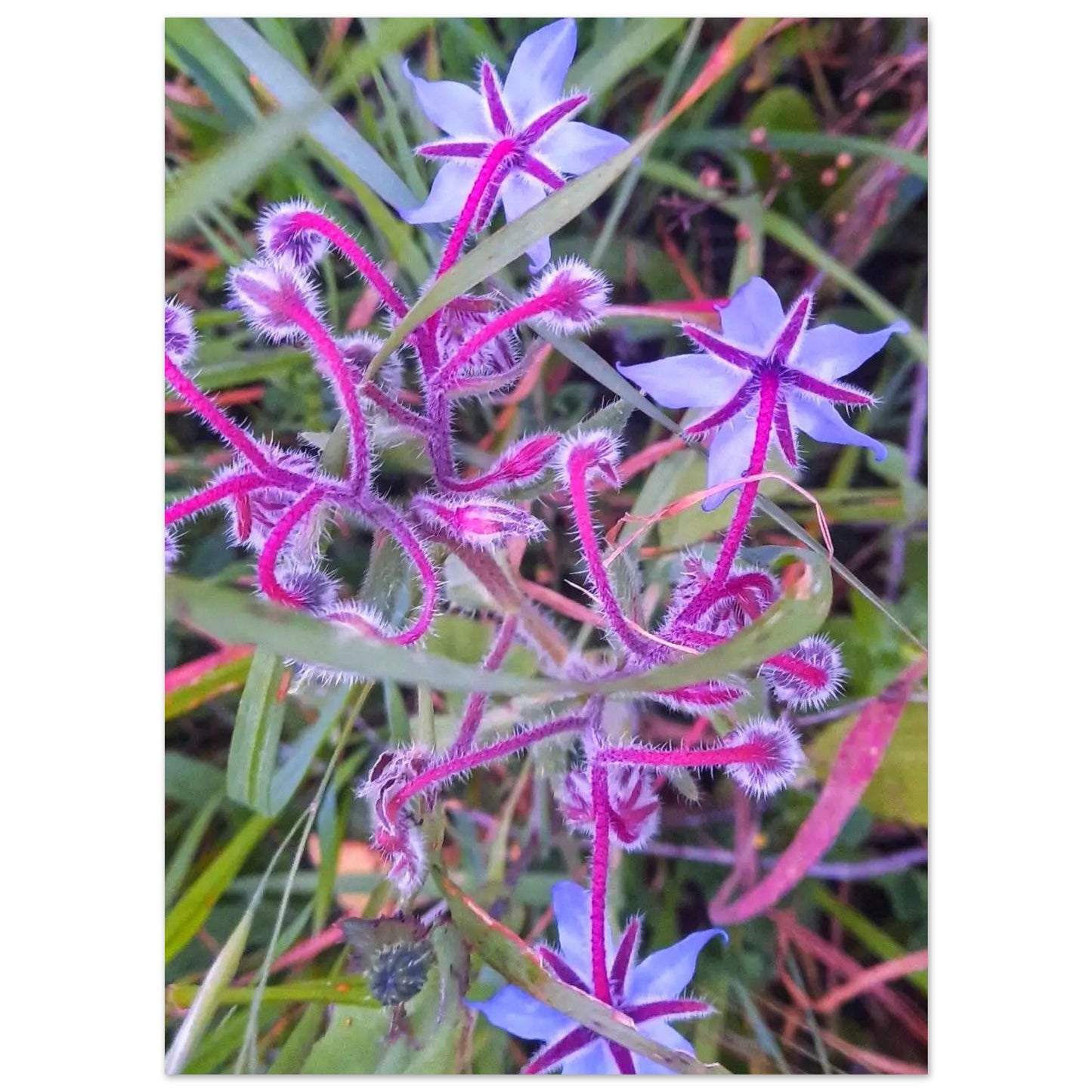
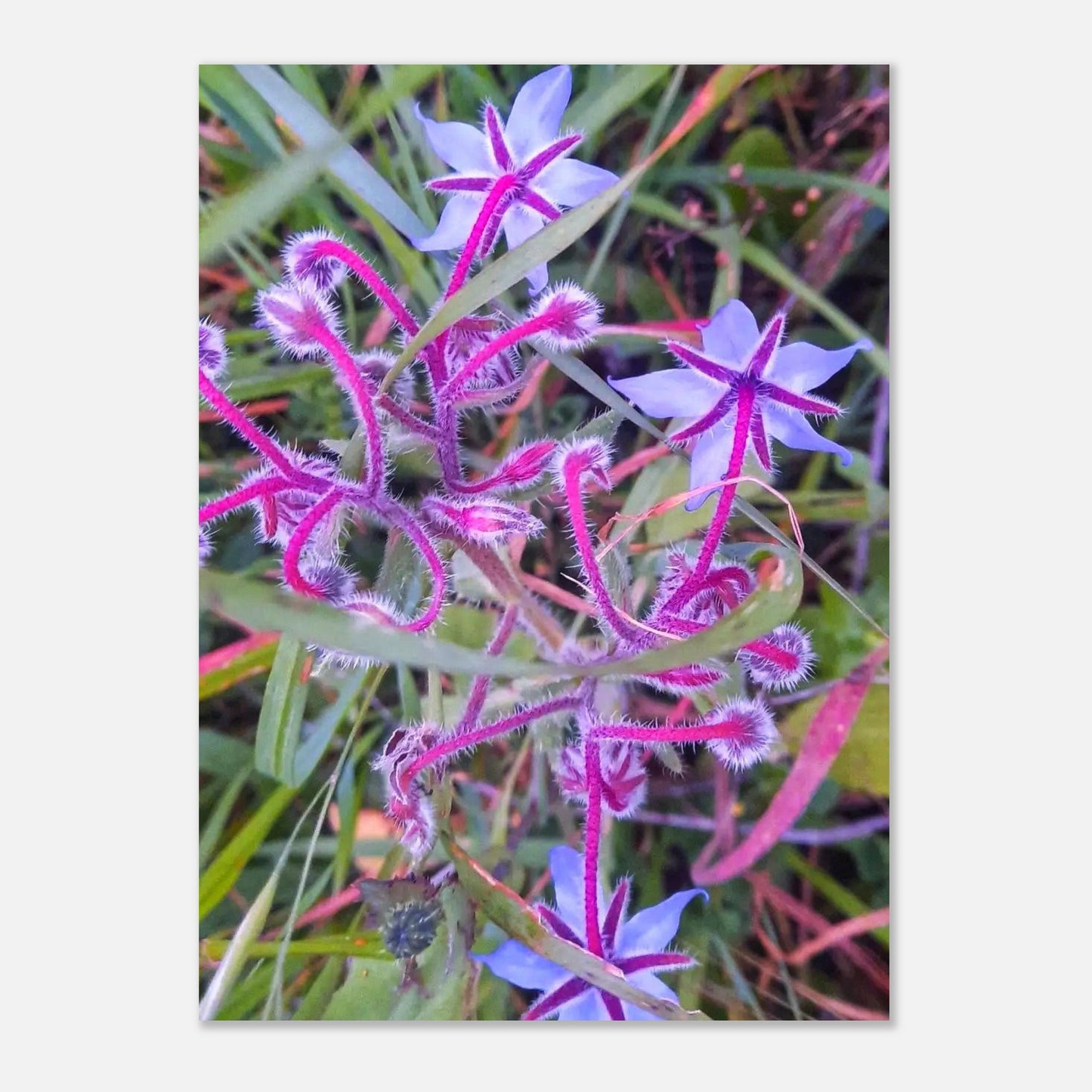
Borago officinalis
Borage
Family: Boraginaceae
Found in Portugal: Common in gardens, disturbed soils, roadsides, and sometimes naturalised
Description
Borage is a generous, fast-growing plant with bristly stems and vivid star-shaped blue flowers. The leaves are large, soft, and slightly rough to the touch. Flowering from spring through summer, it brings a bright, almost luminous blue to the landscape and hums with visiting bees.
Edibility
Yes — traditionally edible, with care.
-
Young leaves have a mild cucumber-like flavour
-
Flowers are often used fresh in salads, drinks, and desserts
-
Best harvested young, as older leaves become coarse
Borage has a long history as a culinary herb, though it is not suited for frequent or long-term heavy consumption.
Medicinal Uses
Traditionally regarded as a plant that “lifts the spirits.”
-
Leaves and flowers used in infusions as a mild calming herb
-
Historically associated with courage and mood support
-
Borage seed oil is valued for its gamma-linolenic acid (GLA) content, used to support skin and inflammatory conditions
Modern herbal use focuses mainly on the seed oil, rather than the fresh plant.
Safety Notes
-
The leaves and stems contain small amounts of pyrrolizidine alkaloids, which may affect the liver if used excessively
-
Not recommended for long-term internal use
-
Avoid during pregnancy, breastfeeding, or in cases of liver conditions
-
Flowers contain much lower levels and are generally considered safer in small amounts
Notes
Borage is both wild-hearted and generous — feeding pollinators, brightening gardens, and offering gentle support when used wisely. A plant of courage <3
Share